I walked into my office one Monday morning to find a huge pile of paper on my desk. I felt overwhelmed and missed a critical deadline because I couldn’t find a file. That chaotic morning changed my view on success forever.
A clear space truly creates a clear mind. I learned that my environment affects my work and stress levels. Since then, I’ve found ways to keep my workspace clean and organized.
In this guide, I share why a clean environment is key. I’ll show you how to keep your office tidy and organized every day. For more help, call Us at (315) 795-7191.
Key Takeaways
- A tidy desk reduces stress and mental fatigue.
- Regular organization habits stop clutter buildup.
- Digital file management is as crucial as physical space.
- Small daily actions lead to long-term success.
- Professional environments improve focus and quality work.
Understanding the Importance of Workplace Cleanliness
I’ve learned that a workspace’s state reflects a company’s health. By focusing on best practices for workplace cleanliness, I’m not just cleaning. I’m setting a high standard. A clean office shows everyone that you value precision and care.
Promoting Productivity
Clutter distracts and drains mental energy all day. An organized desk helps me stay focused on tough tasks. By following tips for maintaining cleanliness in the workplace, staff can find what they need fast, cutting down on lost time.
“Cleanliness is not a matter of which is greater, but a matter of how we respect our environment and those who share it with us.”
Enhancing Employee Well-being
A clean workspace is key for health and less stress. Dust and disorganization can cause more absences and lower spirits. By following best practices for workplace cleanliness, my team feels supported and comfortable every day.
| Feature | Cluttered Office | Clean Office |
|---|---|---|
| Focus Levels | Low/Distracted | High/Sharp |
| Stress Levels | Elevated | Reduced |
| Professionalism | Poor Perception | Strong Impression |
Making a Lasting Impression
First impressions are made when a client walks in. A clean, organized space shows you’re reliable and detail-focused. For expert advice on these standards, call Us at (315) 795-7191. Following these tips for maintaining cleanliness in the workplace will earn trust with every visitor.
Daily Cleaning Routines
Keeping your office clean is simple with daily habits. By following these tips for maintaining cleanliness in the workplace, you avoid big messes. Staying consistent is key to a clean office.
Quick Tidying Techniques
Try a five-minute reset at the end of your day. Clear trash, stack papers, and clean your keyboard. This keeps your space ready for tomorrow.
“Cleanliness is not just a physical state; it is a mindset that fosters clarity and focus in everything we do.”
Organizing Workspaces
A messy desk can mess with your mind. Keep only what you need daily within reach. Store the rest in drawers. This makes finding things easier and saves time.
Struggling to keep up? Call us at (315) 795-7191 for a custom cleaning plan. We’ll make it fit your office and team.
Maintaining Shared Areas
Spaces like break rooms and conference tables need teamwork. Clean surfaces after use to welcome others. Here’s a simple daily checklist for your team.
| Area | Task | Frequency |
|---|---|---|
| Break Room | Wipe counters | After each use |
| Conference Room | Clear whiteboards | End of meeting |
| Common Desks | Sanitize surfaces | Daily |
| Entryway | Organize mats | Morning/Evening |
By creating a clean work environment through shared habits, you build respect. These tips for maintaining cleanliness in the workplace will make your office better for everyone.
Organizing Your Desk Effectively
Keeping your desk clean is a top tip for a better workspace. A tidy desk helps you focus on what’s important. It lets you control your work better.
Decluttering Essentials
Begin by taking off everything you don’t use daily. Keep only what you need close, like your computer and pen. Store the rest in drawers or bins.
This makes your desk easier to clean. Being consistent is crucial for a neat desk. If you haven’t used something in a week, it’s time to put it away.
Utilizing Storage Solutions
After clearing your desk, add smart storage. Use vertical organizers for documents. Drawer dividers help keep small items tidy.
Modular storage lets you change your desk layout as needed. This keeps your workspace productive, not stressful. For desk layout tips, call (315) 795-7191.
Digital Organization Tips
A clean desk also means organized digital files. Clear your computer desktop of clutter. Create a folder system that makes finding files quick.
Deleting old files and emptying the trash keeps your digital space clean. These habits are key to a tidy office. Digital cleanliness is as important as physical for success.
Cleaning Supplies and Equipment
The key to a clean workplace is the quality of your cleaning supplies. Choosing the right tools and products is essential for keeping your office clean and safe. Follow these workplace cleaning tips to keep your team healthy and productive all year.
Essential Cleaning Tools
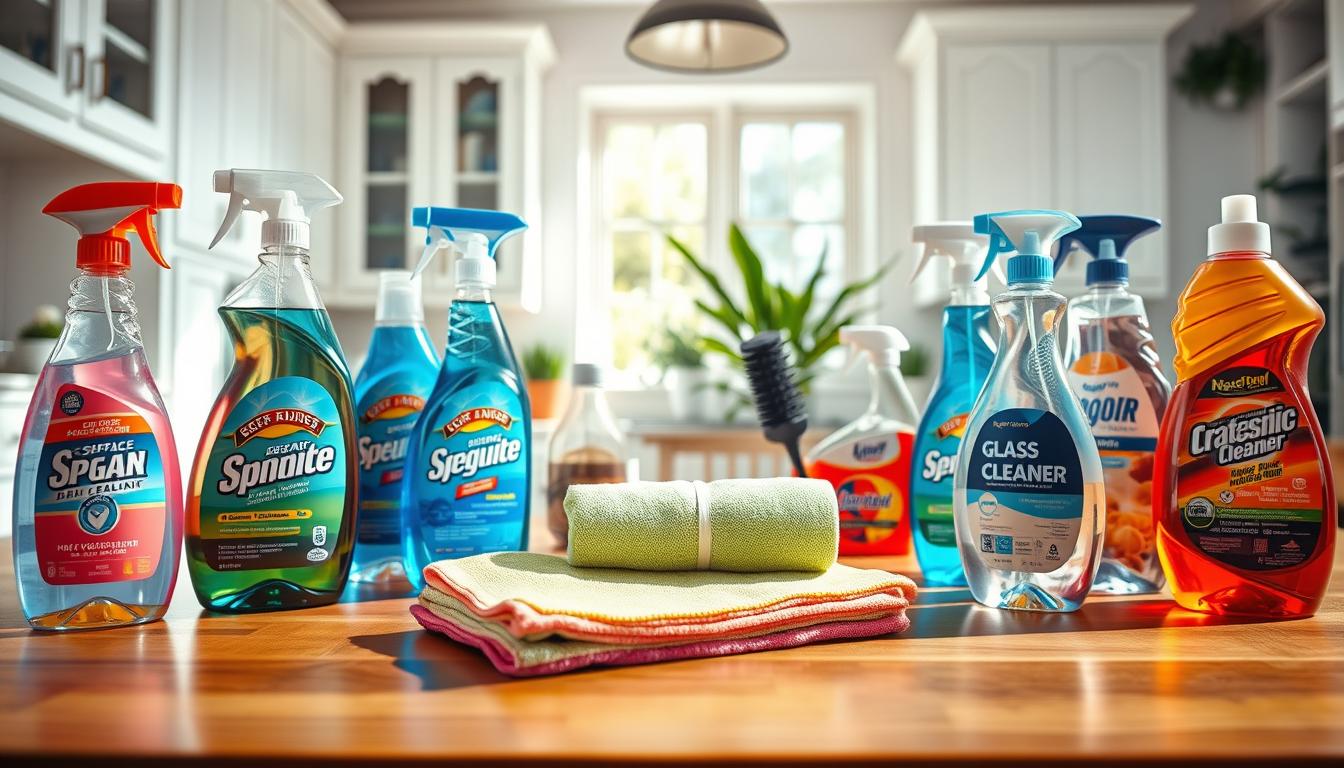
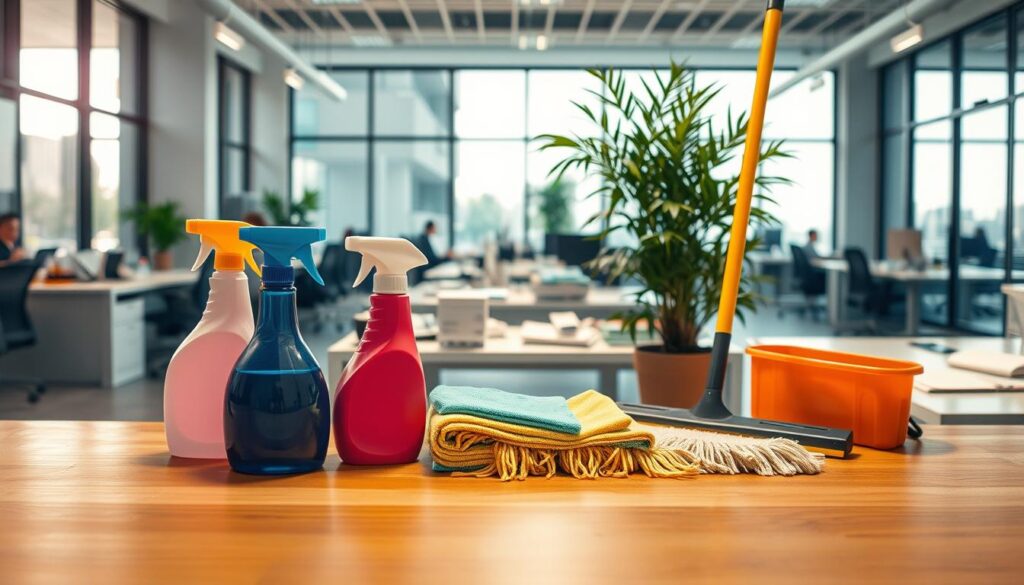
To keep your office clean, stock up on high-quality equipment. The right tools make it easier to clean up messes before they become big problems.
- Microfiber cloths: These are great for catching dust and bacteria without damaging surfaces.
- HEPA-filter vacuums: They’re important for keeping the air clean by catching tiny particles.
- Color-coded buckets: Using different colors for different areas helps prevent germs from spreading.
- Extendable dusters: These are useful for reaching high places like vents and light fixtures safely.
Eco-Friendly Cleaning Products
Choosing green cleaning solutions is a smart move for a clean workplace. These products are safer for your employees because they don’t have harsh chemicals. Many eco-friendly cleaners work just as well as traditional ones.
If you’re not sure which brands to pick, call us at (315) 795-7191. We can suggest cleaning supply vendors that are good for the environment and fit your company’s values.
Proper Maintenance of Cleaning Supplies
Even the best tools won’t last if they’re not taken care of. Always clean your equipment after each use to stop grime and bacteria from building up.
Keep your supplies in a cool, dry, and organized spot to make them last longer. Check your mops, brushes, and vacuums often for damage. Replace them quickly to keep your cleaning work effective.
Regular Deep Cleaning Schedules
Daily tidying keeps things neat, but deep cleaning tackles hidden grime. I believe that creating a clean work environment needs a deeper strategy. By focusing on often-neglected areas, you make your space healthier for everyone.
Establishing a Cleaning Calendar
A consistent schedule is key to any good maintenance plan. I suggest setting up tasks for every quarter or every six months. These workplace cleaning tips include deep-cleaning carpets, sanitizing upholstery, and dusting high places.
“Cleanliness is not just a state of physical order, but a reflection of professional excellence and respect for the team.”
Involving Employees in Deep Cleaning
Getting staff to help with deep cleaning can make everyone feel more responsible. When team members clean their own areas, they tend to keep standards high. This teamwork makes creating a clean work environment a shared goal, not just a task.
Benefits of Professional Cleaners
Some jobs need special tools and skills that only pros have. Experts handle deep sanitization and big tasks that keep your place up to health standards. For more info, call us at (315) 795-7191 to book a deep cleaning consultation.
| Feature | DIY Cleaning | Professional Service |
|---|---|---|
| Equipment | Basic tools | Industrial grade |
| Time Investment | High | Low |
| Deep Sanitization | Limited | Comprehensive |
| Cost Efficiency | Low upfront | High value |
Encouraging a Clean Culture
Creating a clean office starts with leaders leading by example. When leaders show they care about a tidy space, others follow. A shared goal for cleanliness changes the office vibe.
Leading by Example
Managers and team leaders should show the cleanliness habits they expect. Seeing a leader clean up sends a strong message. Consistency shows everyone the importance of a clean space.
Implementing Cleaning Policies
Clear rules help everyone know how to keep the office clean. Simple, doable policies outline who does what in shared areas. For more on office culture, call us at (315) 795-7191.
Rewarding Cleanliness
Positive feedback motivates teams to care for their space. Praising those who keep their desks clean inspires others. Turning cleaning into a positive team goal boosts morale.
The table below shows how different methods keep your office clean and organized.
| Strategy | Primary Benefit | Implementation Level |
|---|---|---|
| Leadership Modeling | Sets the standard | High |
| Clear Policy | Reduces confusion | Medium |
| Incentive Programs | Boosts morale | High |
| Team Audits | Ensures compliance | Medium |
Learning to keep an office clean is a journey. It needs patience and clear communication. By promoting a clean office, you make it better for everyone. For more help, call us at (315) 795-7191.
Addressing Common Workplace Messes
Managing shared spaces and paper is tough in offices. High-traffic areas can get dirty fast if not watched. Focusing on these spots can really boost cleanliness in office areas.
Kitchen and Break Room Hygiene
The break room is key, but it can get messy. Clean out the fridge every Friday to stop bad smells. This keeps the area nice for everyone.
Consistency is key for shared appliances like microwaves and coffee machines. Staff should clean up right after using them. A clean kitchen helps everyone feel good and keeps germs away.
Bathroom Maintenance Tips
Restrooms need extra care for cleanliness. Schedule deep cleans twice a week, plus daily checks. Always have soap, paper towels, and wipes ready for users.
Fix plumbing or ventilation problems fast. For help, call Us at (315) 795-7191. Quick action stops big health problems.
Dealing with Paper Clutter
Paper piles can make offices look messy. Use a “touch it once” rule for documents. This keeps things tidy and helps focus.
Go digital to cut down paper. Use bins for paper that’s needed. Keeping your filing system organized is key for staying organized.
| Area | Primary Focus | Frequency |
|---|---|---|
| Kitchen | Appliance Sanitation | Daily |
| Restroom | Germ Control | Multiple Times Daily |
| Workstations | Paper Management | Weekly |
Creating a Trash and Recycling System
Having a clear plan for trash and recycling is key for any office. A good waste management system keeps the office clean. It stops clutter from building up during the day.
Importance of Waste Separation
Waste separation is not just for the environment; it’s efficient. By labeling bins for paper, plastics, and general waste, my team avoids confusion. This reduces contamination in recycling.
Proper sorting keeps recyclables out of landfills. This simple habit is a big step toward a cleaner work environment. Everyone benefits from it.
Proper Disposal Practices
Food waste should never stay in desk bins. It attracts pests and smells bad. Instead, staff should use break room containers for organic waste.
Using liners and keeping lids on bins helps keep messes in check. These small actions stop big sanitation problems in shared spaces.
Regularly Emptying Trash Bins
Keeping up with cleanliness is crucial. I suggest emptying bins daily to avoid overflow and keep the office looking professional. A full bin is a sign of neglect.
If you want to improve your recycling or cleanliness, call us at (315) 795-7191. We’re ready to help you reach top cleanliness standards with better waste management.
Designing Clean Workspaces
Creating a clean office begins before you start cleaning. The layout of your workspace is key to keeping it tidy. By planning well, you can stop messes before they start.
Ergonomic and Clean Workspace Layouts
I choose furniture that’s easy to clean and move. Ergonomic chairs with mesh backs are better for cleaning than fabric ones. A smart layout makes every part of the room easy to clean.
Want to improve your floor plan? Call us at (315) 795-7191. We can suggest furniture that’s both comfy and clean. Strategic placement of desks and storage can cut down on cleaning time.
Utilizing Minimalist Design
Minimalism is more than looks; it’s practical for a clean office. Fewer items mean less dust. It’s a top office hygiene tip for easier cleaning.
Keep only what you need within reach. Removing clutter makes your space feel professional and calm. A minimalist office is easier to keep tidy.
Adding Green Elements
Plants can make your office air fresher and happier. But choose low-maintenance ones to avoid mess. Greenery adds a fresh touch to your office hygiene tips.
Not sure about plants for your office? Call us at (315) 795-7191. We can guide you on adding nature to your space. Healthy, clean workspaces come from smart, thoughtful choices.
Communicating Cleanliness Expectations
Sharing cleanliness expectations with the team is key to a tidy workspace. When everyone knows their part in keeping the office clean, the whole office culture improves. Using office hygiene tips effectively means sending a clear message to all employees all day.
Clear Signage and Reminders
Visual cues are constant reminders that keep cleanliness in mind. I suggest putting up small, professional signs in busy areas like the kitchen or near printers. These signs help remind everyone of best practices without needing to say it out loud.
Staff Meetings on Cleanliness
Regular meetings are great for talking about keeping the office clean. In these meetings, I share important office hygiene tips and why they’re good for our health. It’s a chance to get everyone on the same page with new policies and answer questions about shared duties.
Feedback Mechanisms
Communication should go both ways to work well. I encourage my team to share their thoughts on cleaning through anonymous surveys or suggestion boxes. This way, we can spot problems early and make changes to meet everyone’s needs.
| Communication Method | Primary Benefit | Frequency |
|---|---|---|
| Visual Signage | Immediate reminders | Permanent |
| Team Meetings | Direct alignment | Monthly |
| Suggestion Box | Anonymous feedback | Ongoing |
Clear communication makes sure everyone knows their part in keeping standards high. Need help with policies or more office hygiene tips? Call us at (315) 795-7191. I’m here to help make your workspace cleaner and more productive.
Conducting Cleanliness Audits
I think regular audits are key to keeping your workplace clean and efficient. By checking your space often, you can spot problems early. These office hygiene tips help keep your office looking professional and supporting your team.
Self-Assessment Techniques
Start by walking through your office with new eyes. Look for dust, clutter, and missed spots. Being objective is crucial during these checks.
Focus first on busy spots like entryways and shared desks. Note any issues to fix them right away. This is a smart office hygiene tip for any business.
Using Checklists
Checklists help keep things consistent. They break down cleaning tasks into daily, weekly, and monthly tasks. This way, no area is missed in your routine.
Need a checklist? Call us at (315) 795-7191 for a sample. It helps track your progress and keeps your team on track. Using a checklist makes it easy to follow a clear plan.
Continuous Improvement Strategies
Audits should be ongoing, not just one-time. Review your results monthly to see what needs improvement. This lets you adjust your cleaning schedule to fit your office better.
Want to improve your strategy? Call us at (315) 795-7191. We can help you keep up high standards. Below is a guide on how to schedule your audits for best results.
| Audit Frequency | Primary Focus Area | Goal |
|---|---|---|
| Daily | Desks and Break Rooms | Remove immediate clutter |
| Weekly | Floors and Shared Equipment | Deep sanitization |
| Monthly | Storage and Supply Closets | Inventory and organization |
Training Employees on Cleanliness
I believe that consistent education is key to a clean office. When team members get the importance of workplace sanitation practices, they help keep the space healthy. Training makes sure everyone knows how to keep their area safe and tidy.

Orientation Programs
Teaching good habits starts with the first day. I suggest adding a module on office hygiene in new hire orientations. This shows the company cares about a clean, professional space from the start.
- Explain where cleaning supplies are.
- Review desk organization rules.
- Show how to dispose of waste and recycle.
Workshops and Seminars
Learning doesn’t end after the first week. Workshops help keep essential habits alive and introduce new ways to stay tidy. These sessions are great for discussing challenges and improving our cleanliness efforts together.
If you want to improve your team’s cleanliness, I’m here to help. Call us at (315) 795-7191 to set up a staff training session that fits your office’s needs.
Sharing Best Practices
Learning from each other is very effective. I encourage team members to share their cleaning tips. Seeing colleagues succeed with certain workplace sanitation practices motivates others to try them too.
- Start a digital space for sharing cleaning tips.
- Feature a “clean desk” success story in the newsletter.
- Ask for feedback on the best cleaning tools.
Fostering Team Responsibility
Cleanliness is not just one person’s job. It’s a team effort. When everyone contributes, the office shines in unexpected ways. Workplace sanitation practices become easier when everyone feels responsible.
Encouraging Team Cleaning Sessions
Turning office maintenance into a team mission changes everything. I recommend short, team cleaning sessions. It makes the work feel like a unified effort to better our space.
Want to learn more about team-building exercises for cleanliness? Call us at (315) 795-7191. We can help make these sessions fun and productive for your team.
Setting Group Goals
Clear goals keep everyone motivated. Setting group goals helps maintain high workplace sanitation practices all week. Whether it’s the break room or shared storage, these goals unite everyone.
Building Accountability
Accountability is key for team cleaning. When colleagues support each other, spaces stay tidy without constant supervision. Peer encouragement works better than orders in building a caring culture.
| Approach | Responsibility | Outcome |
|---|---|---|
| Individual | Isolated tasks | Inconsistent results |
| Team-Based | Shared ownership | High consistency |
| Professional | External service | Deep cleaning focus |
By focusing on teamwork, workplace sanitation practices become part of your culture. Small actions from everyone create a healthier, more professional space for all.
Continuous Evaluation and Feedback
Keeping your office clean is a long-term goal. Your approach to keeping it clean should grow with your business.
Regular Check-ins
Set up monthly meetings to check your office’s cleanliness. These meetings help you find areas that need improvement and hear from your team.
Good communication helps you catch problems early. Listening to your team gives you important insights into your office’s needs.
Adapting Cleaning Practices
Your business will change, and so should your cleaning plan. Update your cleaning schedule when you get new staff or change your office layout.
Being flexible keeps your cleaning practices effective. Call me at (315) 795-7191 to talk about improving your maintenance plan. My team is here to help make your office healthier and more productive.